Press kit
Calendum makes a user's calendars protect each other — a personal event automatically holds the time on their work calendar — built end to end on Apple's own frameworks, with no third-party dependencies, no SDK, no server, and no account.
Fast facts
- Name
- Calendum
- Platform
- iPhone and iPad, iOS 18 or later
- Price
- $14.99, one time. 7-day free trial, extendable once by another 7 days. No subscription.
- Release date
- TBC
- Developer
- Independent, one person
- Press contact
- presscalendum.app
The story
Every calendar app on the App Store will show you all of your calendars at once. None of them will make those calendars cooperate. If your dentist appointment is in your personal calendar, your colleagues can still book straight over it, because your work calendar has no idea it exists.
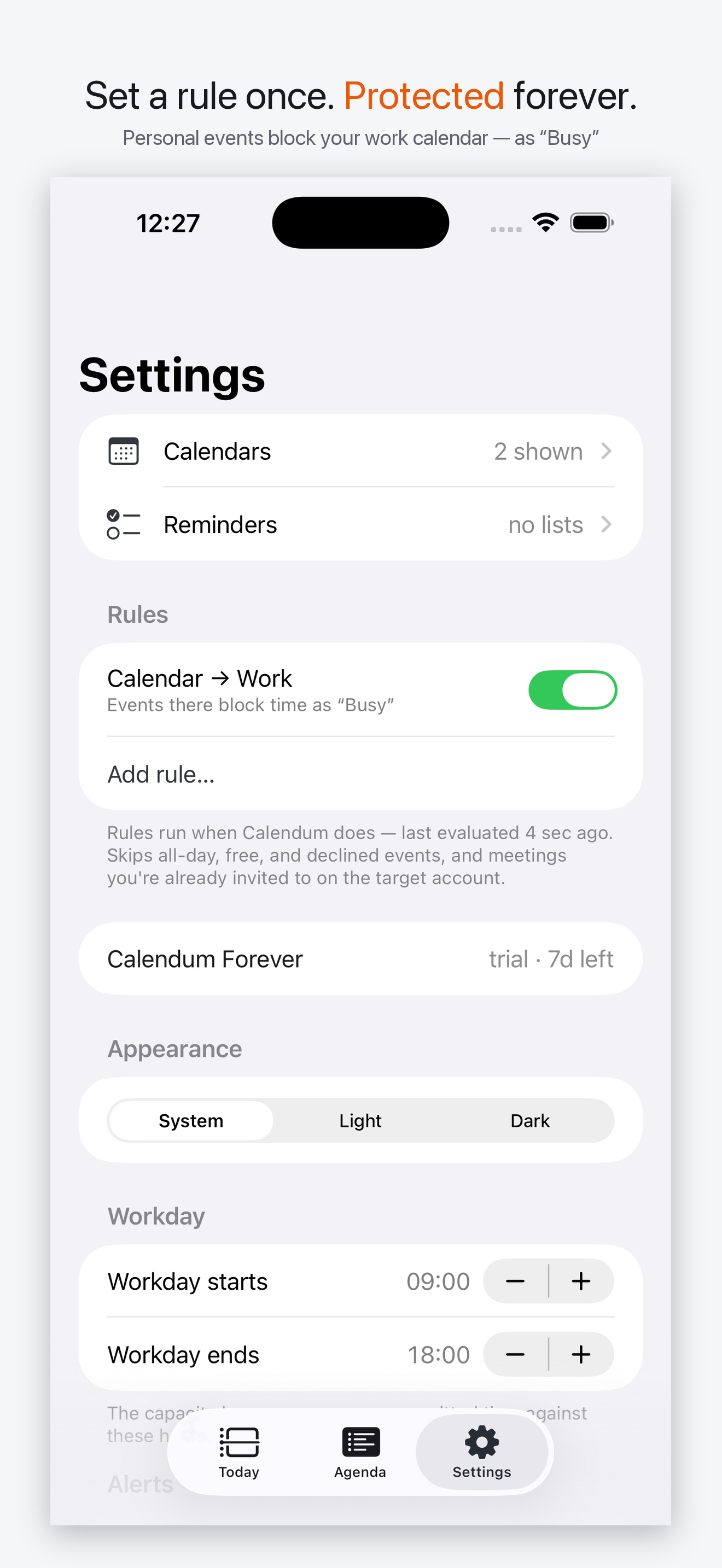
Calendum's protection rules close that gap. Set a rule once — "when my personal calendar has an event, block that time as Busy on my work calendar" — and Calendum writes the block, owns it, and keeps it healthy. If the event moves, the block moves. If it's deleted, the block disappears. The block carries no detail about what triggered it, so colleagues learn that the time is taken, not why.
Why the engineering is the story
Calendum has no backend, no third-party dependencies, and no analytics SDK. It is EventKit, SwiftData, WidgetKit, App Intents, and StoreKit — Apple frameworks and nothing else. Its own data syncs through the user's private CloudKit database, which the developer cannot read.
That constraint made the hard parts harder, and they are worth asking about:
- Identifier re-keying. On Exchange, the first server sync rewrites both of an event's identifiers. Anything Calendum saved a moment earlier resolves to nothing. Ownership therefore can't be identifier-based.
- Marker-owned events. Every event Calendum creates embeds a self-describing marker that survives the Exchange re-key and survives occurrence detachment on Google. Stored identifiers are a cache; the marker is the truth. Calendum can rebuild its entire sense of ownership from a cold start by scanning for its own markers — which is what makes the self-healing behaviour possible.
- Per-backend write semantics. Moving a mirrored event is a native move on CalDAV, but a create-then-remove sequence on Exchange, in that order, because the reverse loses the block.
- Time zones and DST. Anything date-related ships with unit tests in the same commit, including Europe/Kyiv DST transitions.
Privacy here isn't a policy page. It's the architecture: there is no server to leak, no account to breach, and no SDK to phone home. It's also why a one-time price is sustainable — there is no cloud bill to pass on.
Design
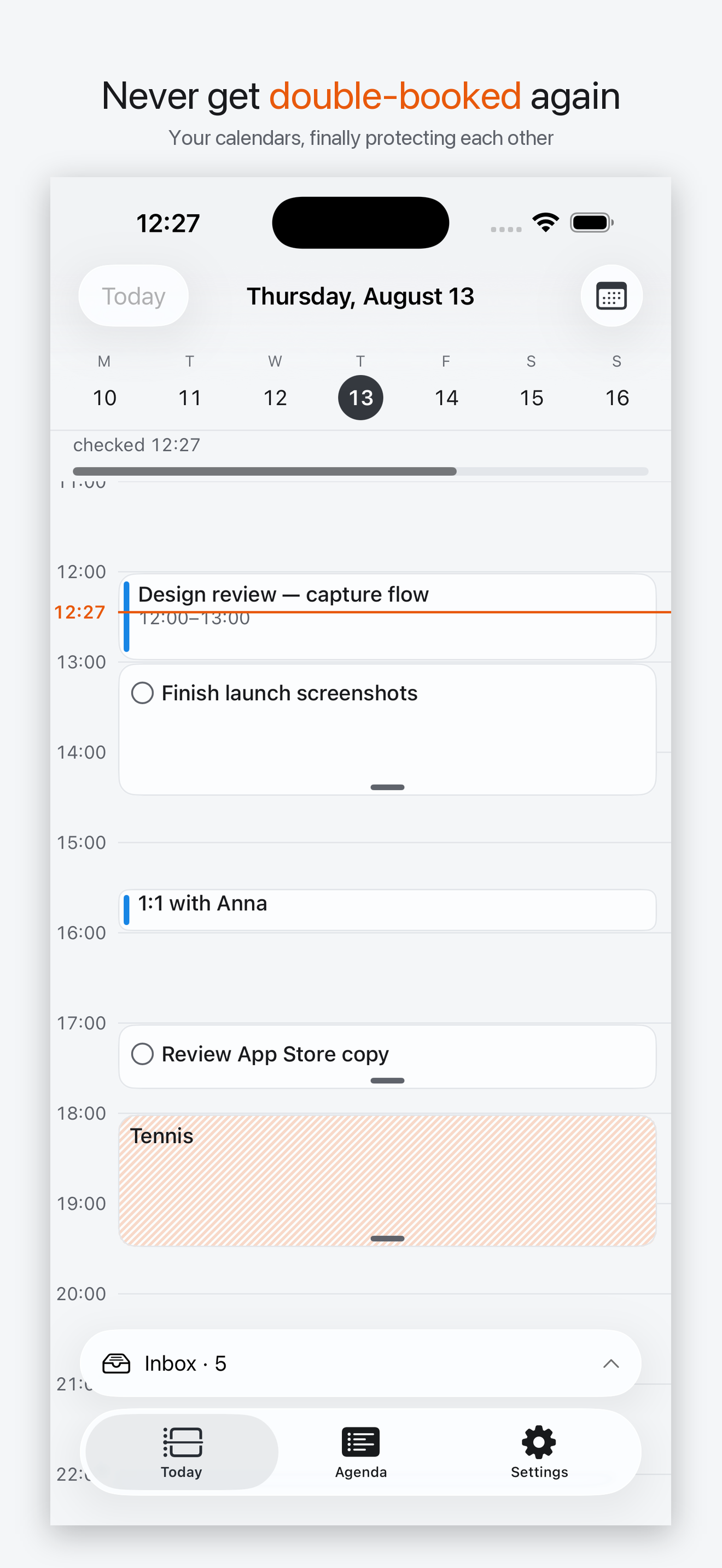
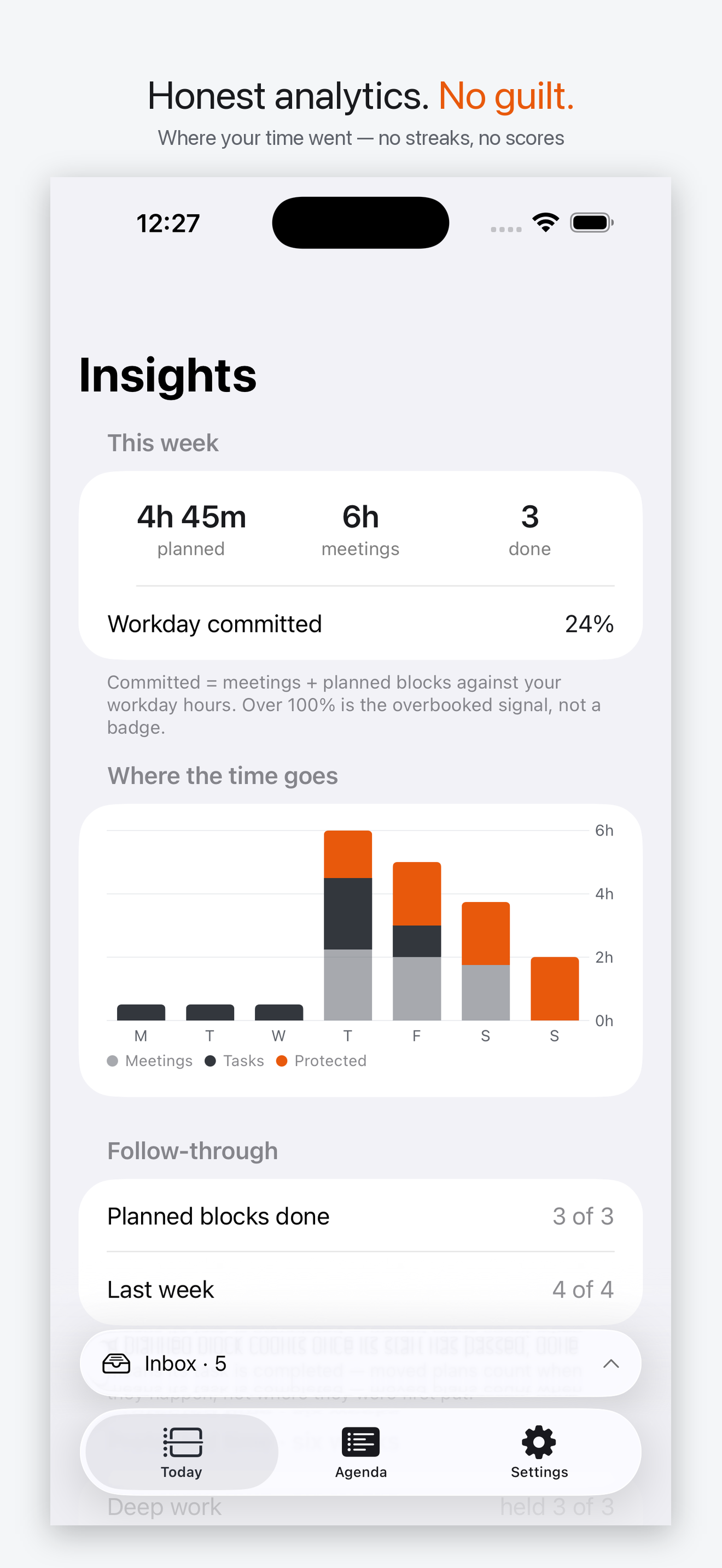
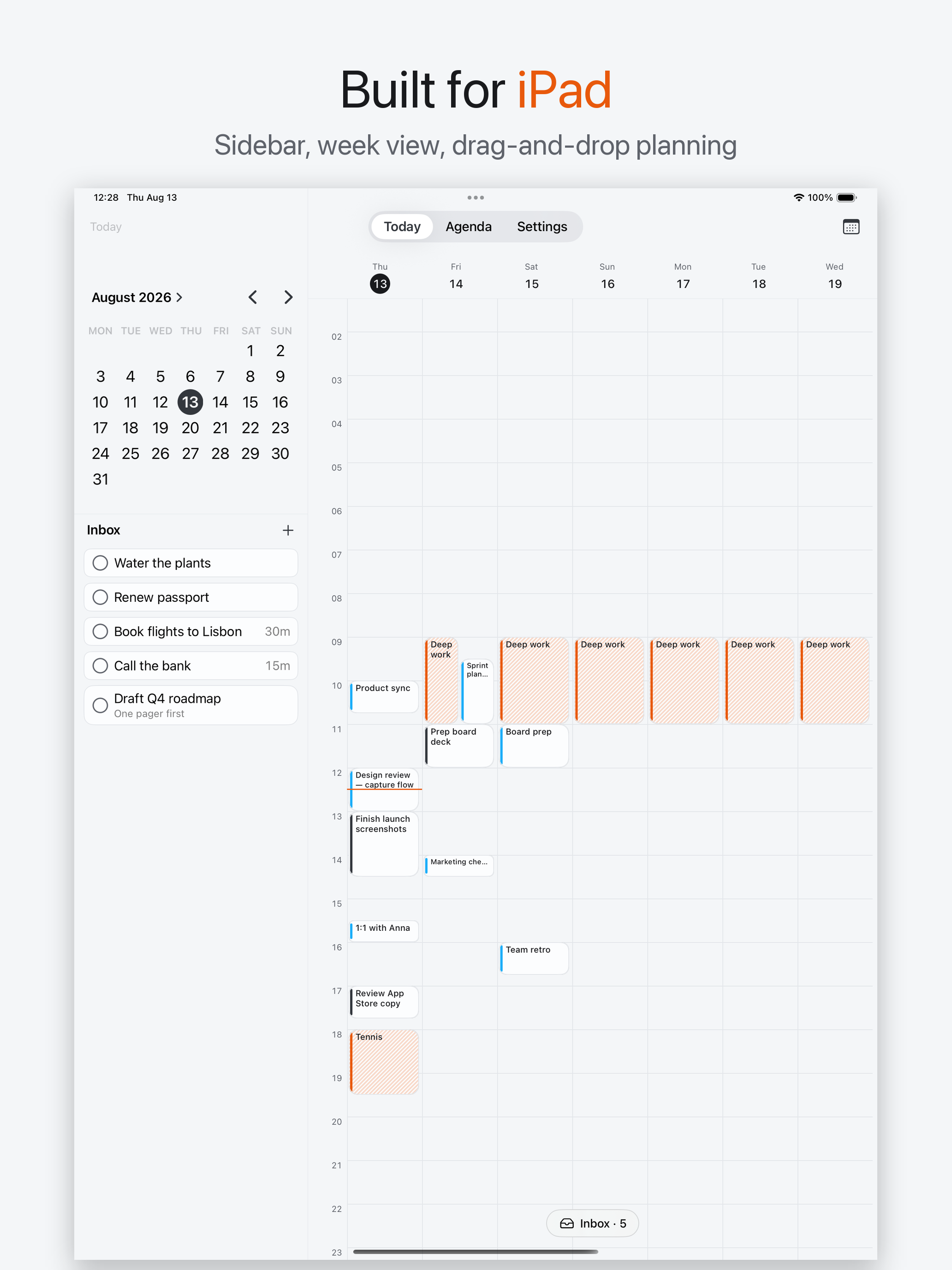
The visual identity is called Alloy: machined greyscale, with exactly one orange note used only where attention is genuinely owed — the now-line, protected time, capacity overflow. Nothing decorative is ever orange. Calendar sources keep their own colours, eased slightly, so the timeline stays calm enough for that single note to speak. No streaks, no confetti, no productivity scores.
Screenshots
Full-resolution PNGs. Free to use in coverage of Calendum.
-
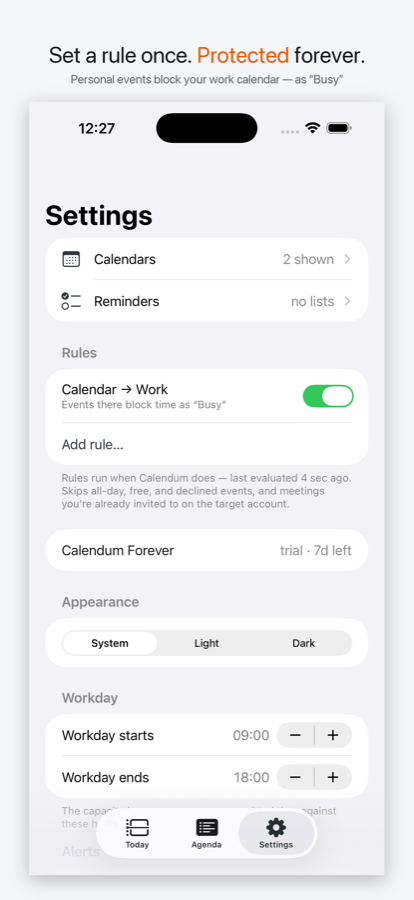
Protection rules — full size -
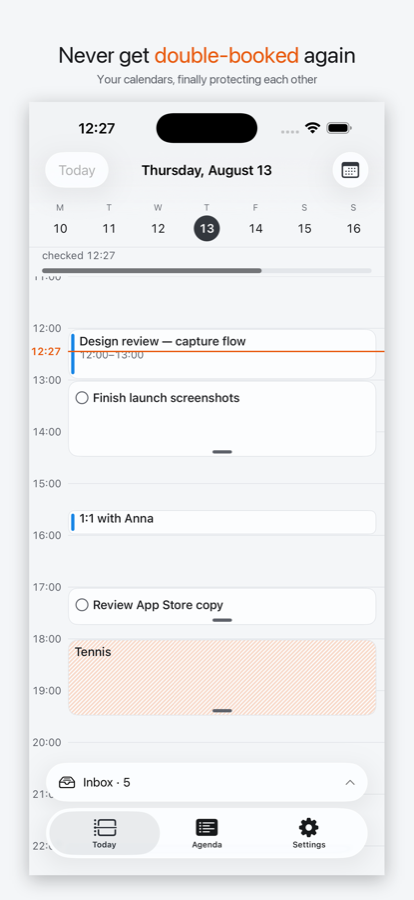
Day timeline — full size -
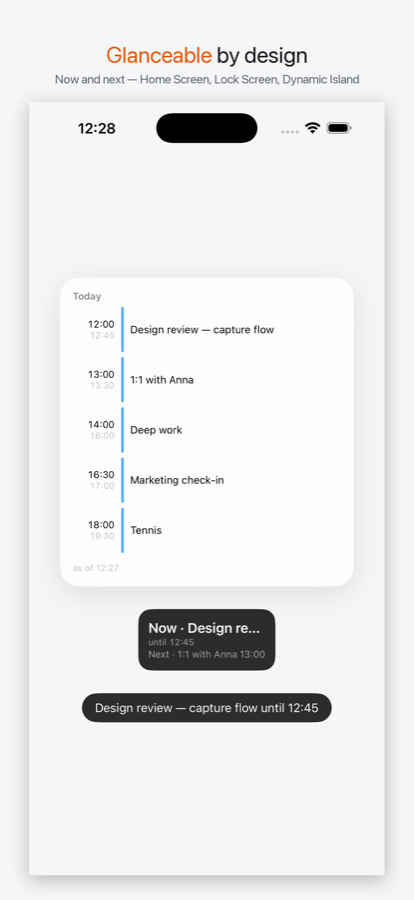
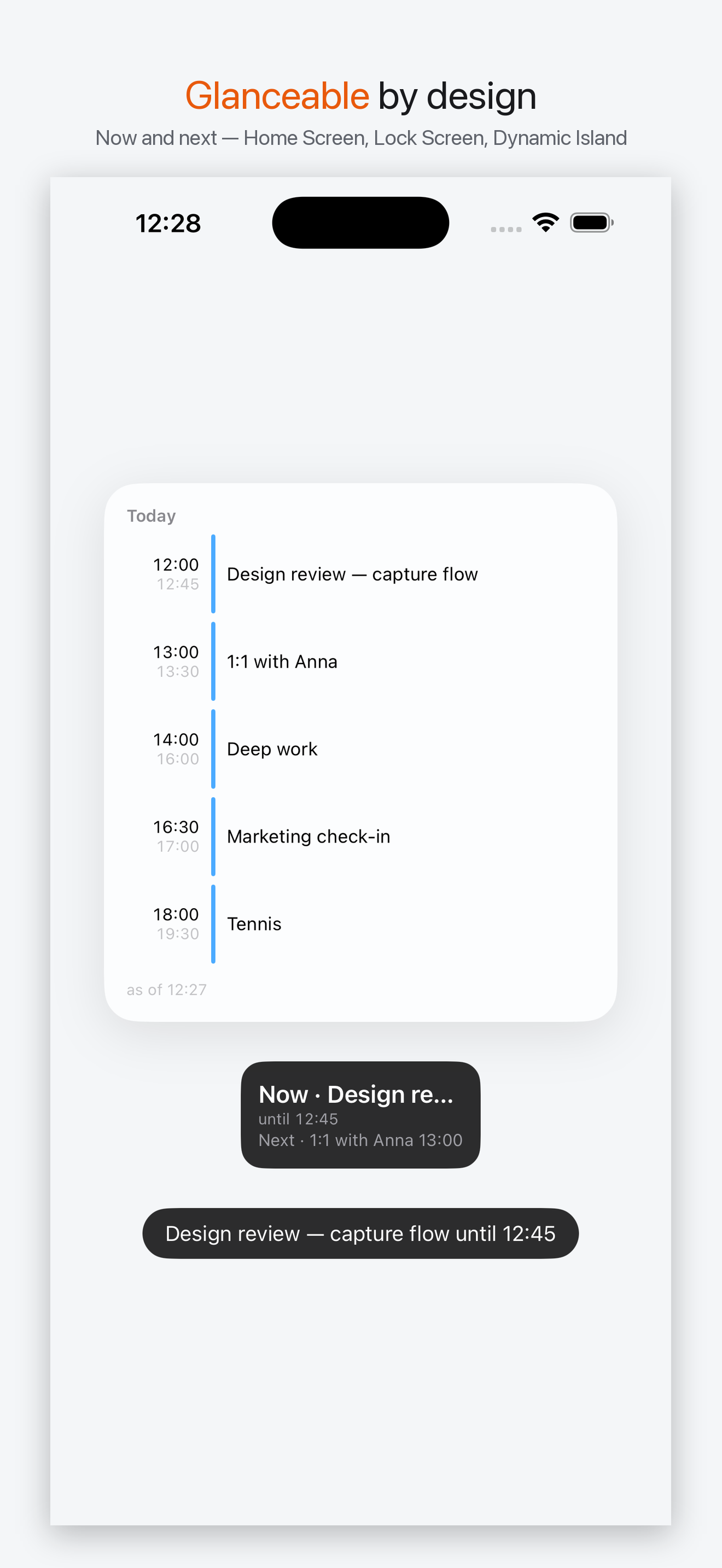
Widgets — full size -
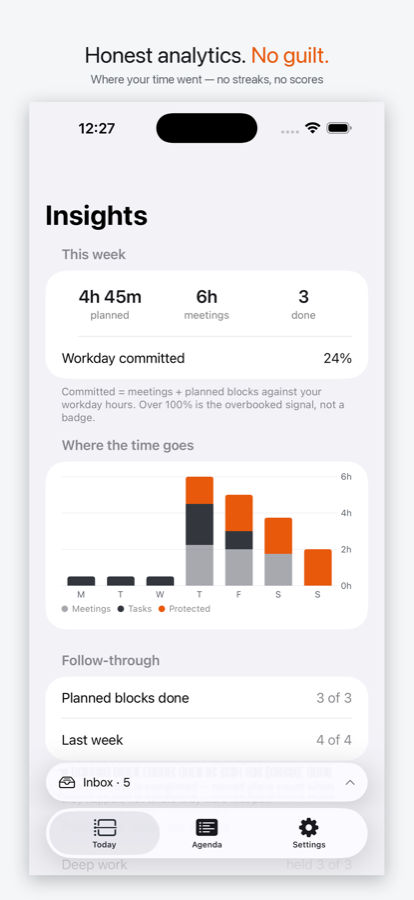
Insights — full size -
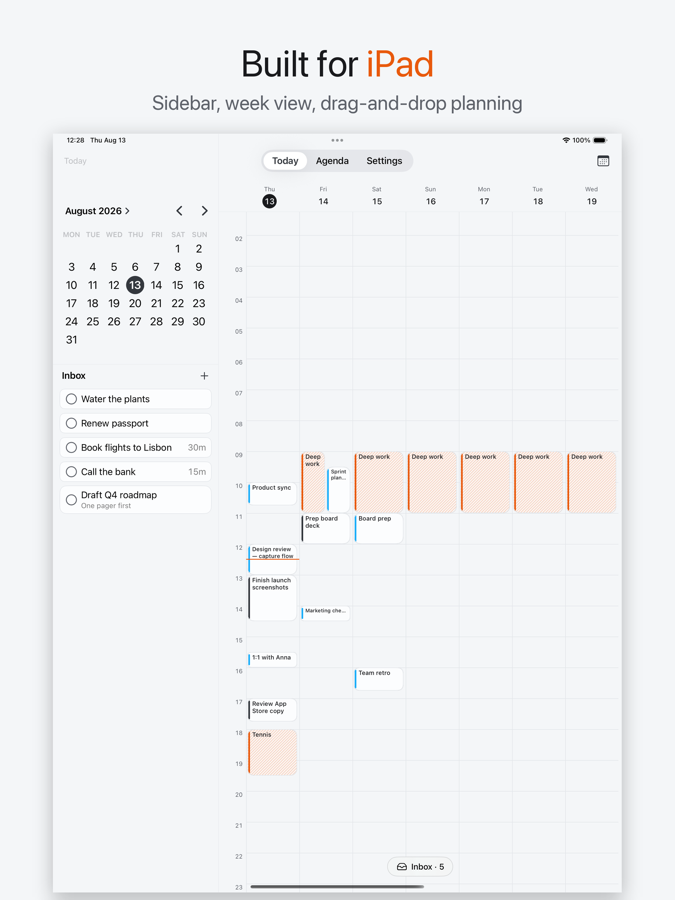
iPad week view — full size
Founder line
"Built by one person who got double-booked one time too many."